

Designing a pool area isn’t just about choosing a surface—it’s about creating a space that looks inviting, feels comfortable, and performs well under everyday use.
Many traditional poolside materials, such as concrete, tiles, or stone, can feel harsh underfoot, become slippery when wet, or heat up quickly under the sun. Even with regular maintenance, they may not provide the safety and comfort you want.
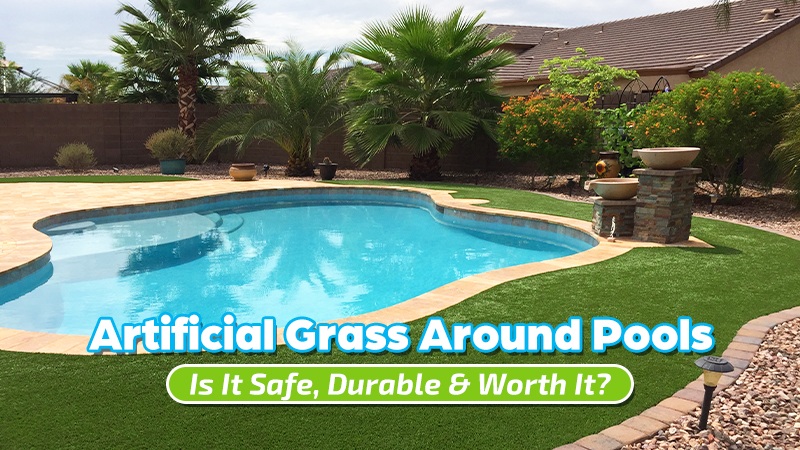
Increasingly, residential and commercial spaces are turning to high-performance alternatives, such as artificial grass, to create poolside areas that are both attractive and practical.
This guide breaks it down from a practical perspective—covering performance, selection criteria, and installation—so you can make an informed decision.
In this article:
Artificial Grass vs Common Poolside Surfaces
Artificial grass is often compared with common poolside materials such as concrete, tiles, or decking. Each option performs differently in terms of comfort, safety, and maintenance.
Here’s a quick overview:
| Surface | Safety | Maintenance | Aesthetics | Temperature |
| Artificial Grass | Cushioned, non-slip | Medium | Evergreen / Consistent | Less heat retention than hard surfaces |
| Concrete | Can be slippery when wet | Low | Functional / Plain | Heats up quickly |
| Pavers / Stone | Hard, may be slippery | Medium | Natural / Textured | Retains heat |
| Porcelain Tiles | Slippery when wet | Low | Sleek / Modern | Heats up quickly |
| Wood / Decking | Can splinter or warp | High | Warm / Natural | Moderate |
| Natural Grass | Slippery, muddy | High | Seasonal / uneven | Naturally cool |
Rather than excelling in just one aspect, artificial grass offers a more balanced combination of comfort, appearance, and usability—especially in poolside environments.
Why Artificial Grass Works Well Around Pools
Around a pool, the surface you choose shapes the entire experience—how it feels underfoot, how safe it is when wet, and how easy it is to keep clean.
Artificial grass works well in this environment because it solves several everyday frustrations that come with traditional poolside materials.
First, it creates a softer and more comfortable surface. Unlike concrete or tiles, which can feel hard and unforgiving, artificial grass provides a cushioned feel that is more pleasant for walking, sitting, or relaxing barefoot.
It also improves safety in wet conditions. Pool areas are constantly exposed to water, and smooth surfaces can quickly become slippery. The textured fibers of artificial grass provide natural grip, helping reduce the risk of slips when people are moving between the pool and surrounding areas.
Another key advantage is how it keeps the space looking clean and organized. Artificial grass does not create mud, loose debris, or grass clippings, helping maintain a tidier pool area with less effort.
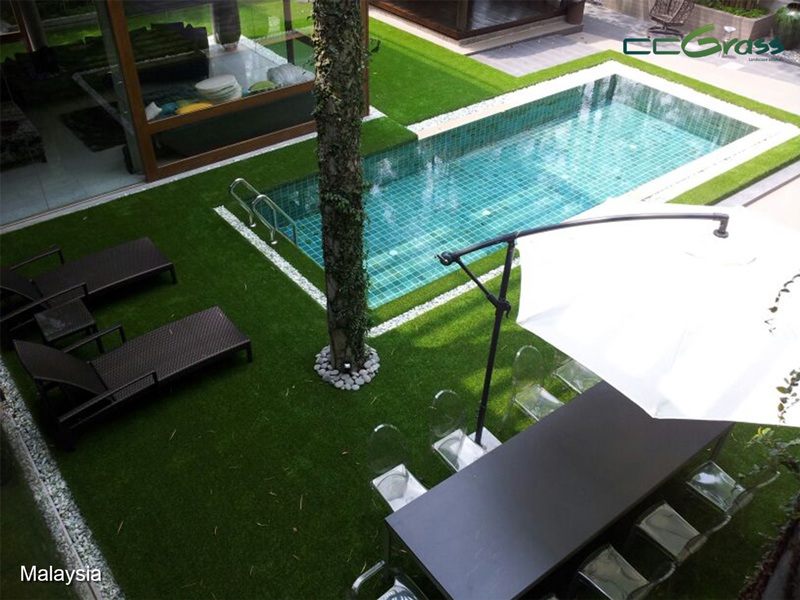
Visually, synthetic grass adds a consistent, green layer that instantly elevates the look of the space. Whether in residential backyards or commercial environments like hotels and resorts, it helps create a more relaxed, resort-style atmosphere that feels both inviting and well-designed.
That said, artificial grass is not completely maintenance-free. Occasional rinsing and brushing are still needed, particularly in high-use areas, to keep the surface clean and performing well over time.
Quick Summary
Advantages of fake grass around pools:
- Softer and more comfortable for barefoot use
- Better traction compared to smooth hard surfaces
- Cleaner, more organized poolside environment
- Strong visual appeal with a consistent green look
What to be aware of:
- Requires light but regular maintenance
- Can warm up under strong sunlight
- Installation quality affects long-term performance
How to Choose the Right Artificial Grass for Pool Areas
Not all artificial grass performs equally well around pools. The right choice depends on a combination of drainage, durability, comfort, and resistance to environmental factors.
Prioritize drainage and backing system
Drainage is the most critical factor in pool environments, as the surface is constantly exposed to water from splashes, rain, and cleaning.
Choose artificial grass with a highly permeable backing system that allows water to pass through quickly and prevents accumulation beneath the surface. Fully permeable backings are generally more effective than perforated ones, providing faster and more consistent drainage in areas with frequent moisture.
Choose an appropriate pile height
A moderate pile height (around 25–35 mm) is typically recommended for poolside applications. It provides a good balance between comfort and practicality, offering a soft feel underfoot while remaining easy to clean and maintain.
Consider density and durability
Higher density turf is better suited for pool areas, where foot traffic is frequent. It helps the grass maintain its structure over time and improves overall resilience against wear.
Select the right yarn material
Polyethylene is commonly used for poolside artificial grass because it offers a softer and more natural feel. At the same time, it maintains good durability, making it suitable for both residential and commercial applications.
Ensure UV and chemical resistance
Pool areas are exposed to strong sunlight and chemicals such as chlorine. Choosing turf with reliable UV stabilization and chemical resistance helps maintain color, strength, and performance over time.
Recommended Artificial Grass Solutions for Pool Areas
After understanding the key requirements, the next step is choosing a solution that fits your project.
For Commercial Pool Areas
Commercial spaces like resorts, hotels, and water parks require turf that can handle heavy traffic, strong sunlight, and frequent exposure to pool chemicals.
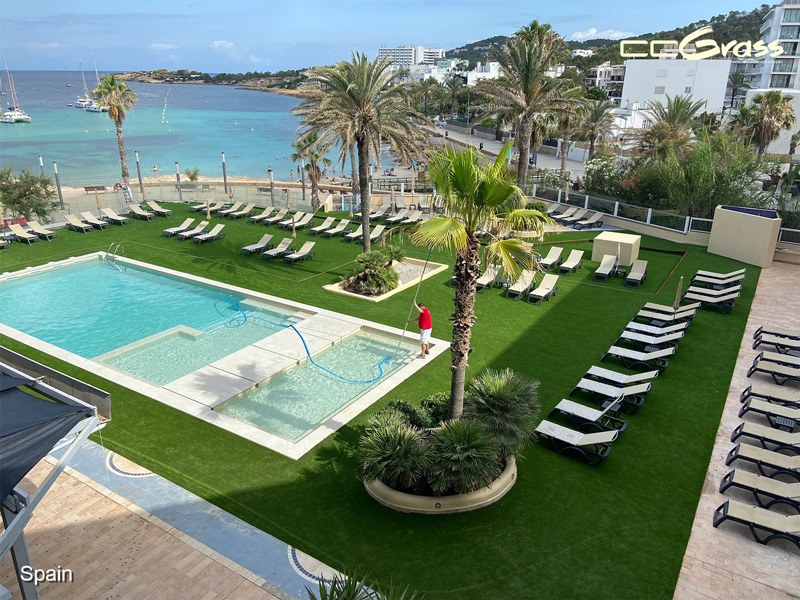
CCGrass SP Grass is designed for these conditions, offering reliable performance and long-term durability. It features strong UV resistance (UVA 5000h & UVB 3000h), chlorine-resistant fibers, and a fully permeable backing for fast drainage—helping keep the surface dry, stable, and safe.
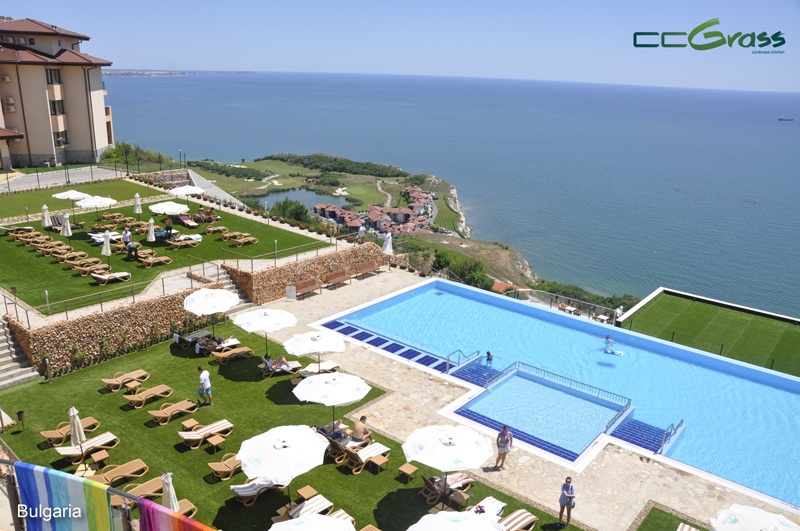
Model: SP Grass
- Unique Cl-resistant system
- Excellent UV resistance
- Superior drainage
- Built for heavy traffic
For Residential Backyard Pool Areas
For backyard pools, comfort and everyday usability are just as important as performance.
Our residential turf with RCX backing provides a softer, more comfortable surface while maintaining effective drainage. It is designed to be skin-friendly, hygienic, and easy to manage for daily use.
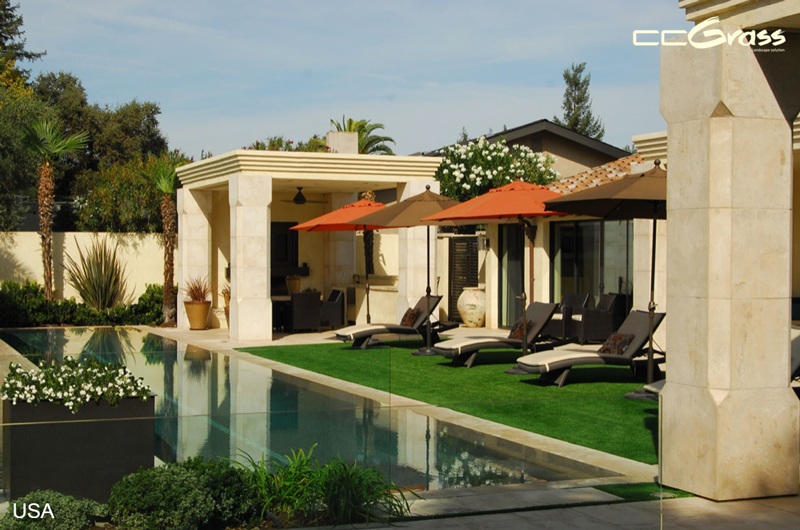
Model: Classic turf with RCX backing
- Soft and skin-friendly
- Antibacterial & mildew-resistant
- Kid- and pet-friendly
- Efficient drainage
How to Install Fake Grass Around a Pool
Installing artificial grass around a pool follows a similar process to standard turf installation, but with greater emphasis on drainage, stability, and precision. Here are the key principles that ensure a safe and long-lasting result.
Base preparation is critical
A well-prepared base is the foundation of any successful installation. Whether installing on soil or hard surfaces, the goal is to create a level, stable base with effective drainage.
This typically involves cleaning, leveling, compacting, and forming a permeable sub-base to prevent water accumulation and future deformation.
Precise fitting and secure fixing
Pool areas often include curves, edges, and transitions between different materials. This makes accurate cutting and fitting especially important.
The turf should be carefully trimmed to match the pool perimeter, with attention to fiber direction for a consistent appearance. Proper fixing—using adhesives or mechanical methods—ensures the turf remains stable and does not shift over time.
Drainage and edge detailing
In pool environments, even small installation details can affect long-term performance.
Ensuring proper slope, clear drainage paths, and well-secured edges helps prevent water pooling and reduces the risk of lifting or movement. These details are particularly important in high-traffic or commercial settings.
Infill: optional but often beneficial
In some cases, a light infill such as silica sand is applied to improve stability, support the fibers, and enhance the overall appearance.
For poolside use, infill is typically applied in controlled amounts and brushed into the base of the turf, rather than left loose on the surface. This means it does not normally stick to feet or get tracked into the pool under normal use.
That said, in certain residential applications—especially where barefoot comfort is a priority—some systems are designed to perform well with minimal or no infill.
For detailed step-by-step guides on installing artificial grass on different bases, please refer to our expert resources: installing artificial grass on concrete and laying artificial grass on soil.
Professional tip
While smaller areas can be installed as DIY projects, poolside installations often benefit from professional execution. Proper handling of drainage, edges, and surface transitions plays a key role in both safety and long-term durability.
Basic Maintenance for Poolside Artificial Turf
Artificial turf around pools is relatively easy to maintain, but a few simple routines can help preserve its appearance and performance over time.
Occasional rinsing helps remove chlorine residue, sunscreen, and dirt, especially in high-use areas. This keeps the surface clean and prevents buildup that may affect both hygiene and drainage.
Brushing the turf periodically helps keep the fibers upright and maintains a natural, even look—particularly in areas with frequent foot traffic.
It’s also important to keep drainage areas clear and check edges from time to time to ensure the surface remains stable and secure.
Overall, maintenance is minimal compared to natural grass, but consistent care will ensure the poolside area stays clean, comfortable, and visually appealing.
FAQ: Artificial Grass Around Pools
Is artificial grass around a pool a good idea?
Yes, artificial grass is a practical and popular choice for pool areas. It provides a clean, visually appealing surface with good traction and low maintenance, while eliminating common issues like mud, debris, and worn-out patches found with traditional landscaping.
Is artificial grass safe around pools?
Yes, artificial grass is safe for poolside use when properly installed. Its textured surface improves grip, while the cushioned structure reduces impact compared to hard materials. Combined with effective drainage, it helps create a safer environment for both residential and commercial spaces.
Does artificial grass get slippery when wet?
No, artificial grass is generally not slippery when wet. The fiber surface provides natural grip underfoot, and efficient drainage prevents water from pooling, helping reduce the risk of slipping compared to smooth materials like tiles or concrete.
Does artificial grass get hot around pools?
Artificial grass can warm up under direct sunlight, but it typically stays cooler than materials like concrete or stone. It also does not become uncomfortably hot to step on, and can be quickly cooled with water if needed.
Does chlorine damage artificial grass?
No, chlorine won’t damage artificial grass when the right product is used. Turf designed for poolside use is made with chlorine-resistant materials, and products like SP Grass are developed to handle regular exposure to treated water without fading or degrading over time.
Will a pool ruin artificial grass?
No, a pool will not ruin artificial grass under normal use. However, prolonged heavy weight, poor drainage, or lack of ventilation may affect its performance over time. Proper installation and occasional maintenance help prevent these issues.
What happens when artificial grass gets wet?
Artificial grass is designed to handle water efficiently. Its permeable backing allows water to drain quickly, preventing puddles, mud, or waterlogging, while helping maintain a clean and usable surface even after heavy use or rainfall.
Conclusion
Artificial grass around pools offers a fresh approach to designing outdoor spaces—combining performance, comfort, and visual appeal. It creates a soft, safe, and cohesive poolside environment while standing up to water exposure, foot traffic, and long-term outdoor use.
With low maintenance requirements, long service life, and a consistently attractive appearance, it represents a smart, cost-effective choice for both residential and commercial pool areas.
As a leading artificial grass supplier with six world-class factories, CCGrass provides wholesale and factory-direct solutions for poolside installations. Contact us today to discuss bulk orders or request a free sample.